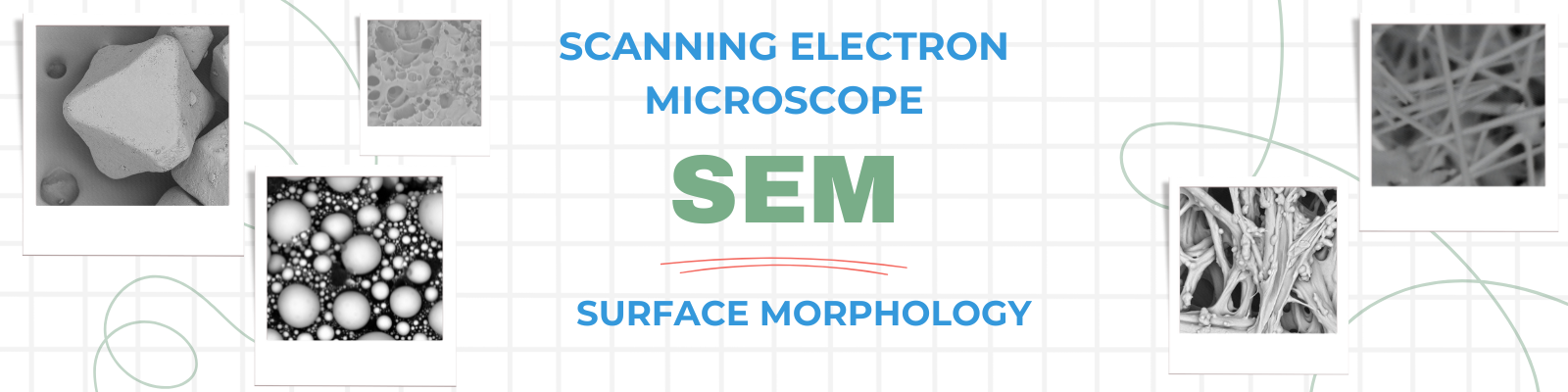
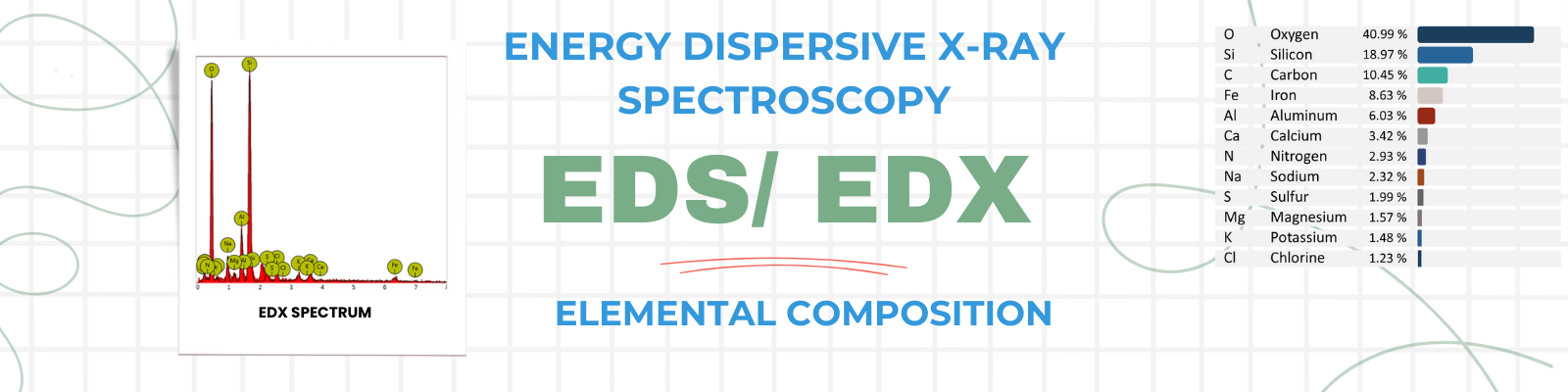
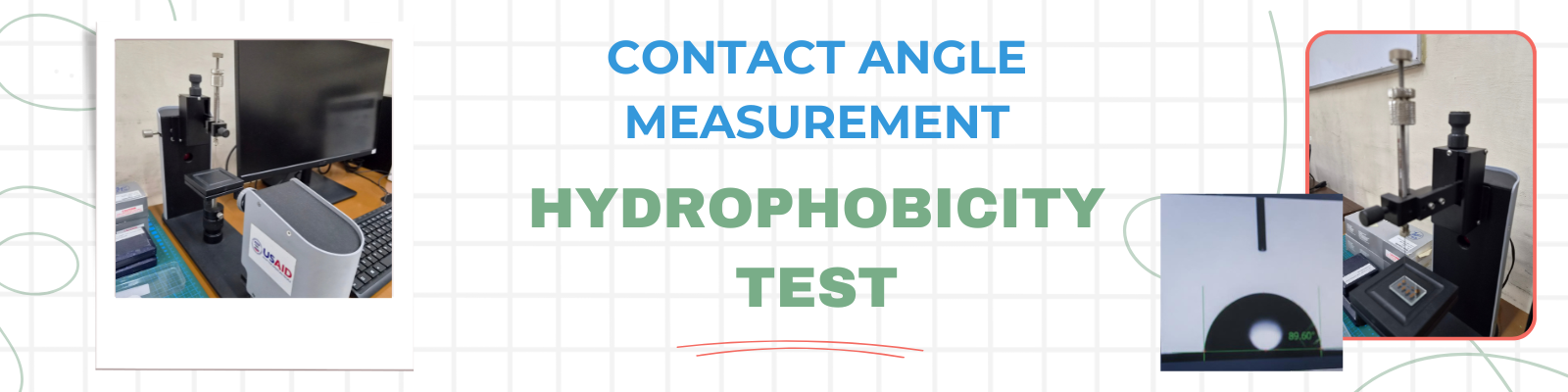
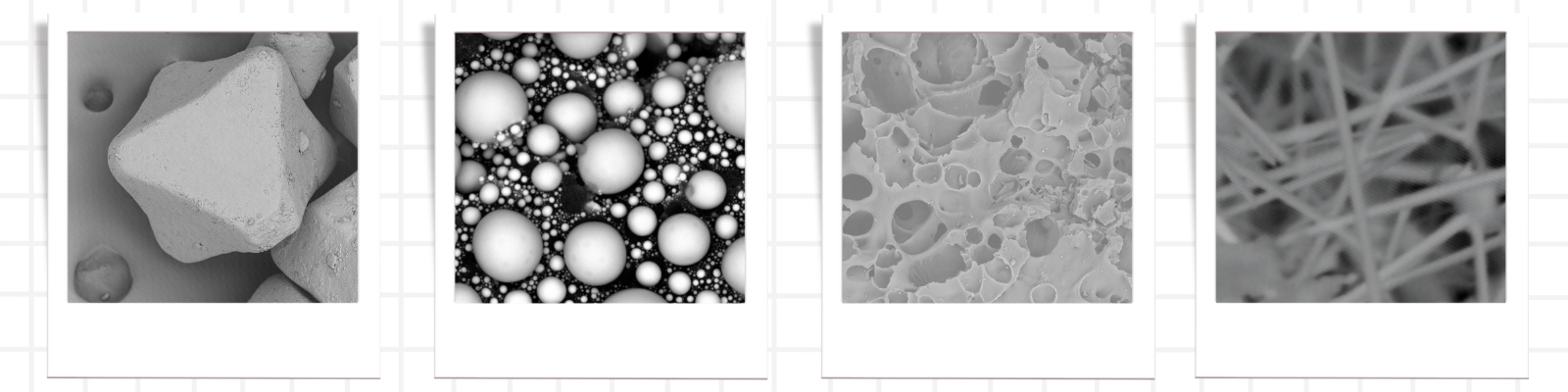
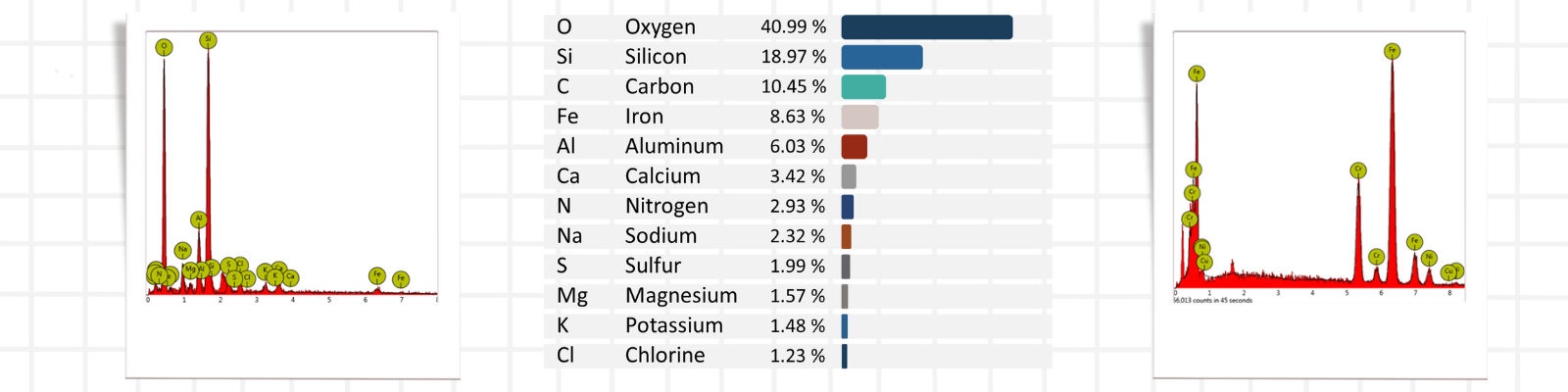
The i-Nano Research Facility, located at De La Salle University Manila, provides cutting-edge analytical services using state-of-the-art scanning electron microscopy (SEM) and energy-dispersive X-ray spectroscopy (EDX) equipment.
With over 15 years of experience in materials characterization, our team of expert analysts delivers precise, reliable results for academic research, industrial R&D, and quality control applications.
We specialize in surface morphology analysis, elemental composition mapping, failure analysis, and contamination identification across a wide range of materials including metals, ceramics, polymers, and composites.
The i-Nano Research Facility at De La Salle University Manila provides SEM and EDX analysis services for academic, industrial, and quality-control applications. The full document includes service scope, sample submission policies, payment procedures, and detailed FAQs to guide your submission.
Table of Contents
Chat with the i-Nano Assistant
Use the chatbot for quick answers about sample expectations, preparation, service scope, pricing, and turnaround time instead of reading through the guidelines page manually. It's also available anytime from the chat button at the bottom-right of the screen.
Sample Preparation Guidelines
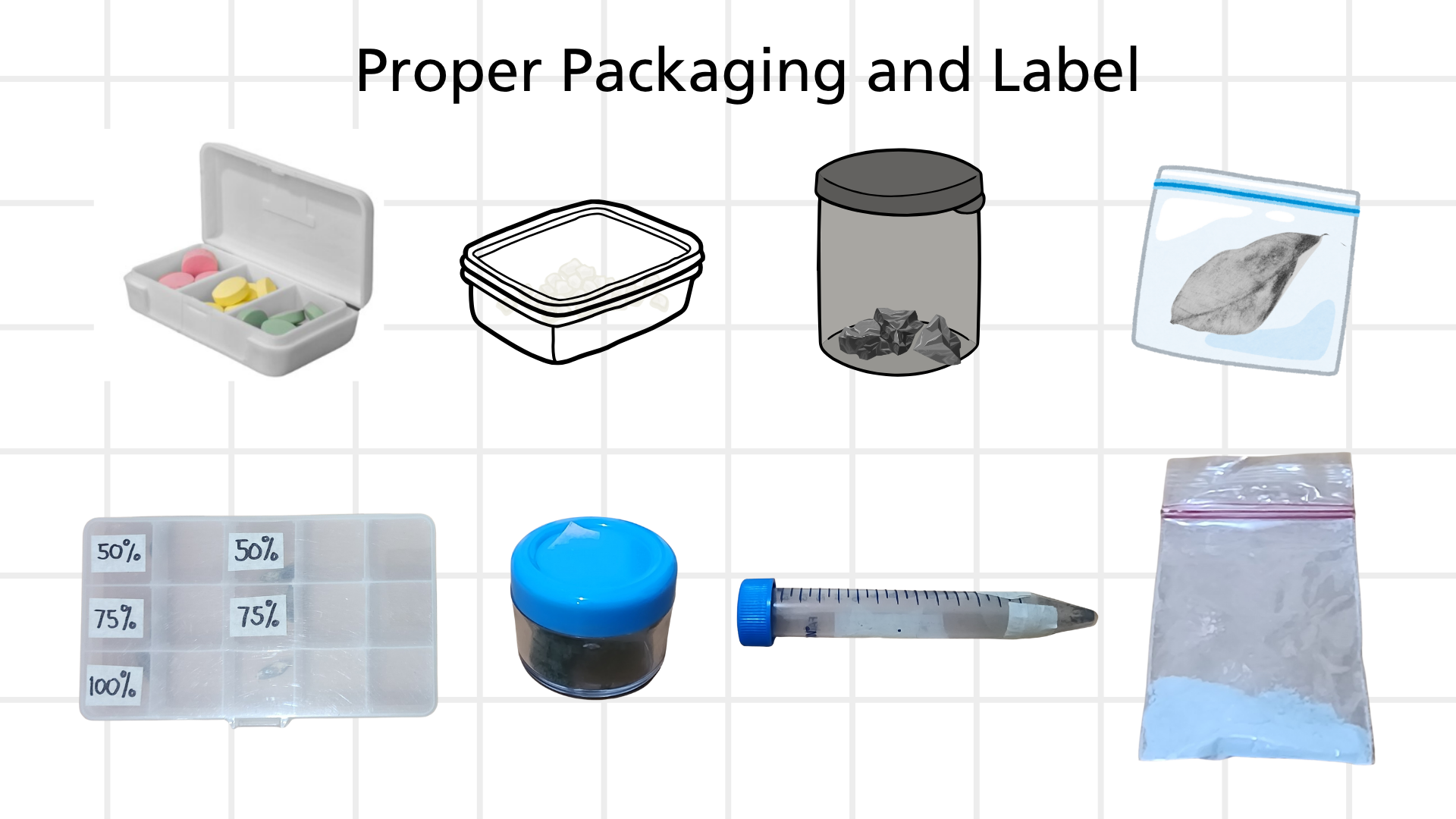
Proper sample preparation is essential for obtaining high-quality SEM and EDX results. Only solid, fully dried samples are accepted to ensure safety and prevent instrument contamination. Each sample should be small, clean, and securely packaged in a labeled container. Following these preparation guidelines helps achieve accurate imaging, reliable elemental analysis, and smooth processing of your request.
Allowed vs. Not Allowed Samples for SEM-EDX Analysis
Allowed Samples (Solid Only)
Not Allowed Samples
Powders / powder-like materials
Liquids
Rock-like or mineral samples
Gases
Glass pieces
Samples containing mercury
Plastics / polymers
Radioactive materials
Organic solids (wood, leaves, seeds)
Biological hazards (blood, tissue, pathogens)
Insects (dry and preserved)
Toxic or highly hazardous materials
Teeth / bone fragments
Corrosive chemicals or strongly reactive materials
Rubber pieces
Wet, moist, or damp samples
Paper / cardboard
Samples that may outgas or contaminate the chamber
Textiles / fabric
Sticky, oily, or adhesive substances
1
Sample Mass & Size
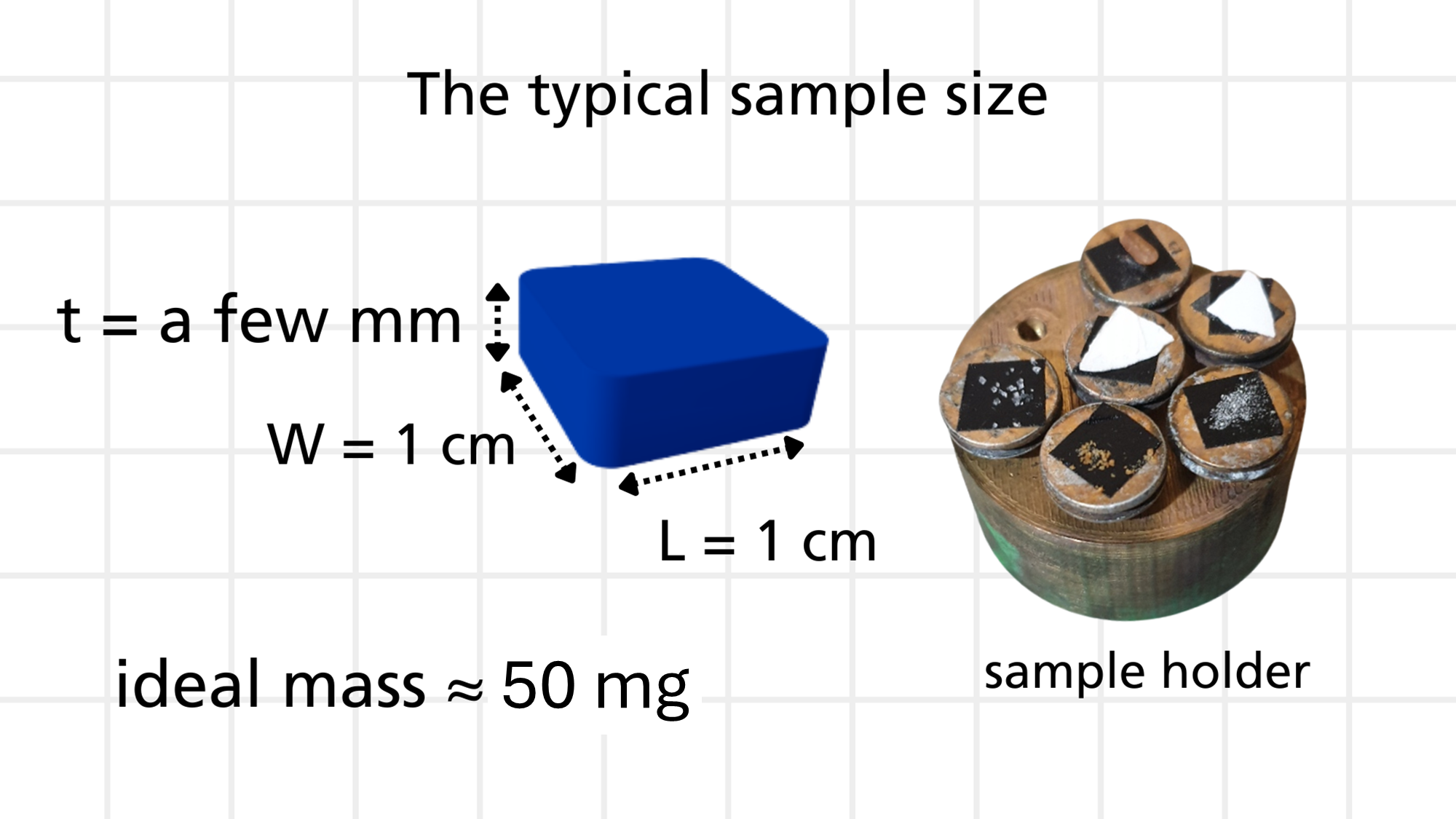
For best imaging and EDX analysis, submit small, solid samples. A typical sample should have a surface area of around 1 cm² and a thickness of a few millimeters. Only a small amount of material is required—an ideal mass is just a few milligrams (≈ 50 mg).
2
Drying
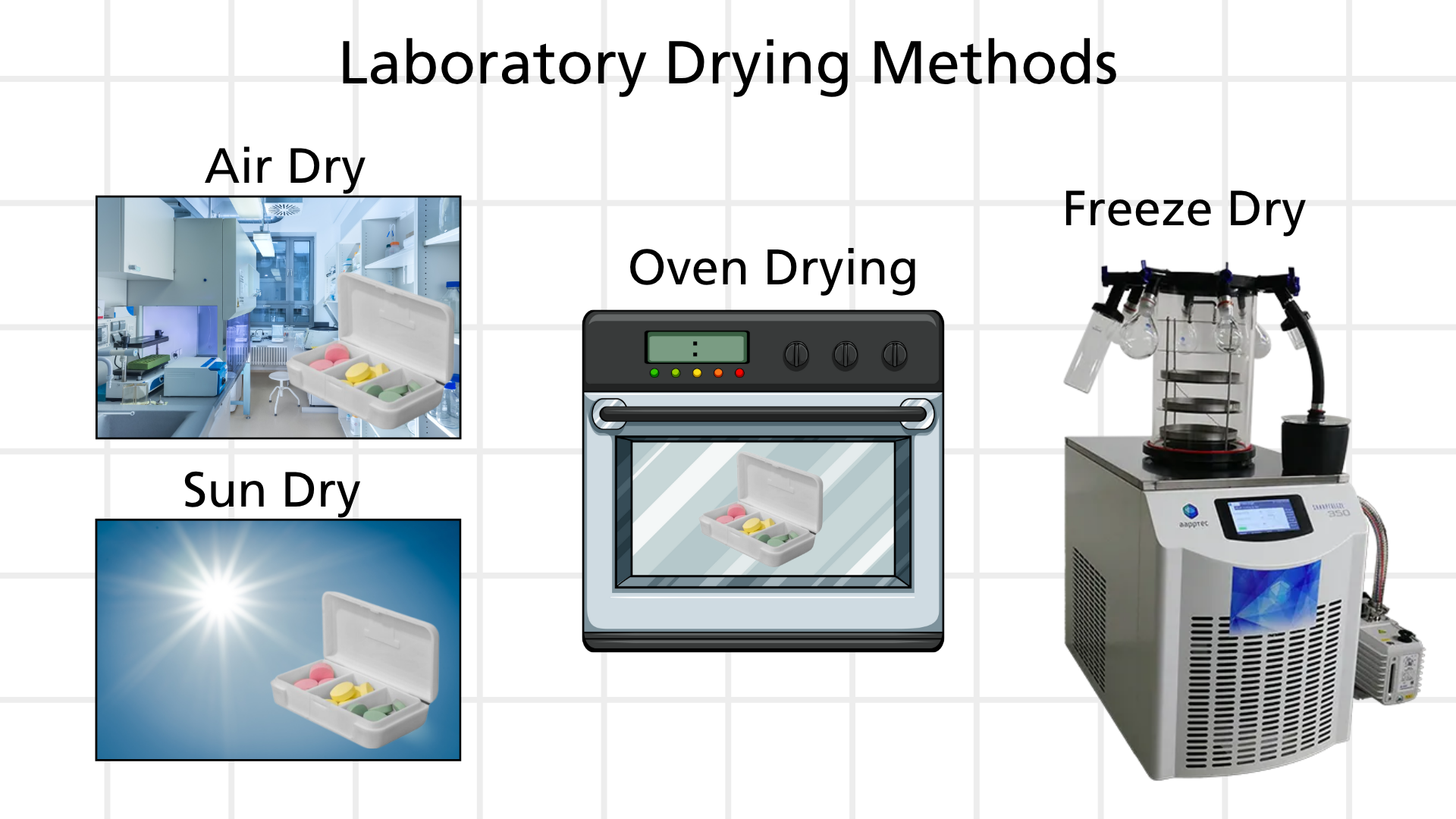
Samples must be completely dry to prevent contamination, outgassing, or damage to the equipment. Samples may be dried using methods such as air drying or sun drying, or through laboratory techniques like oven drying and freeze drying depending on your sample's characteristics. Ensuring samples are thoroughly dried helps achieve high-quality imaging and accurate elemental results.
3
Packaging and Label
Ensure all samples are placed in clean and secure containers. Each container must be tightly sealed to prevent spills or contamination. Label every sample clearly with your name and sample code for easy identification.
⚠️ Important Note:
Contact us for guidance on unusual sample types. Email: admin@inanolab.com Contact Person: Dr. James Olarve Mobile: 09298051084 (Text your concern)
Quick Readiness Checklist
Confirm your samples meet the basic requirements before submitting a request.
0/5 Yes selected
✅ All set! Your samples appear ready for submission.
Extras
Useful applications and resources for researchers. Tools open as separate pages within this site.
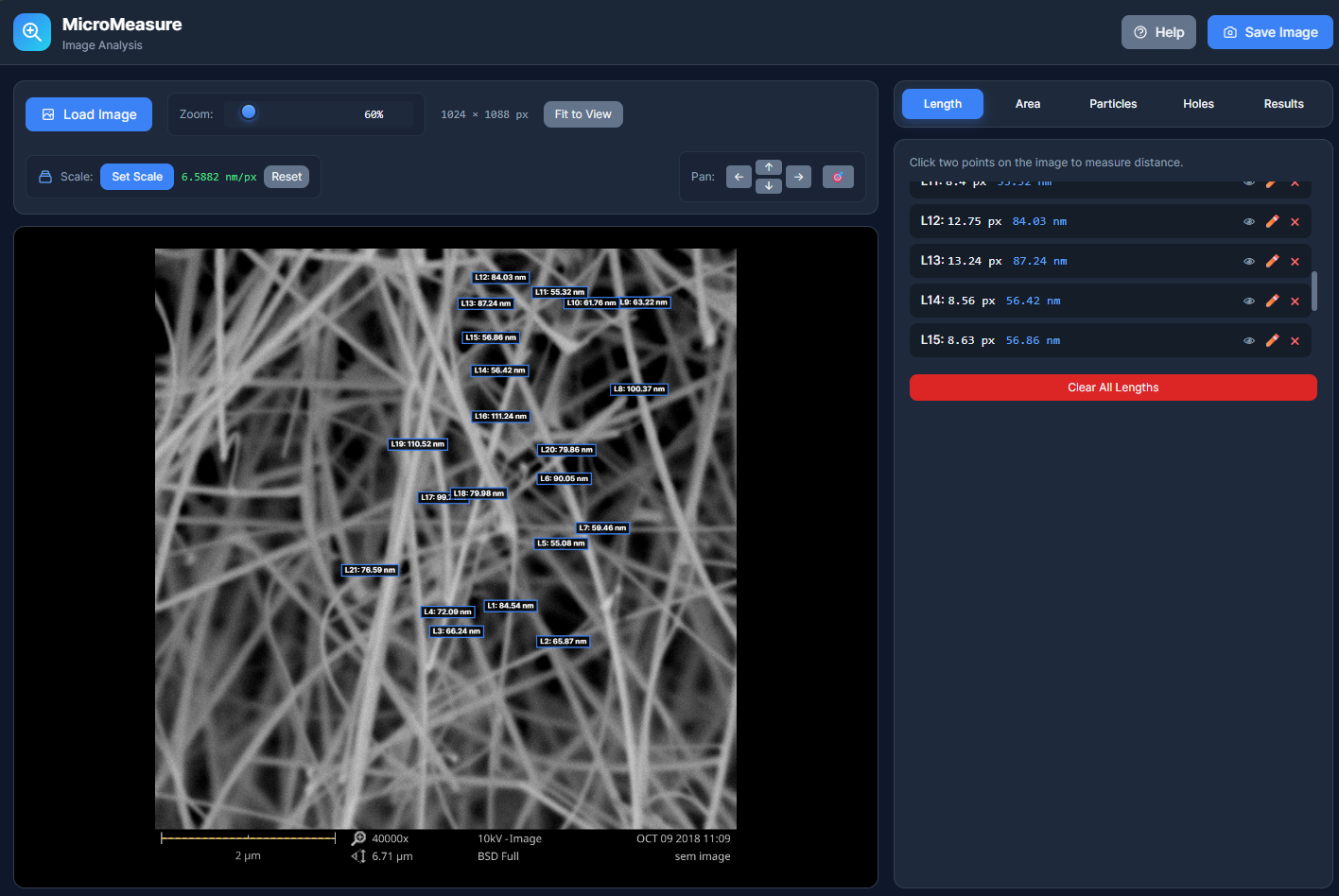
MicroMeasure
Looking for a fast and reliable way to measure features in your microscopy images without installing complex software? MicroMeasure is a browser-based scientific image analysis tool that allows researchers to perform calibrated length, angle, and area measurements, as well as automated particle and hole (pore) analysis, directly from their web browser. It combines essential image-analysis capabilities with an intuitive interface and transparent measurement methods, enabling reproducible, real-unit measurements suitable for research, teaching, and documentation. By reducing technical barriers and simplifying workflows, MicroMeasure offers a practical and accessible alternative for laboratories, educators, and students who need accurate quantitative image analysis anytime, anywhere.
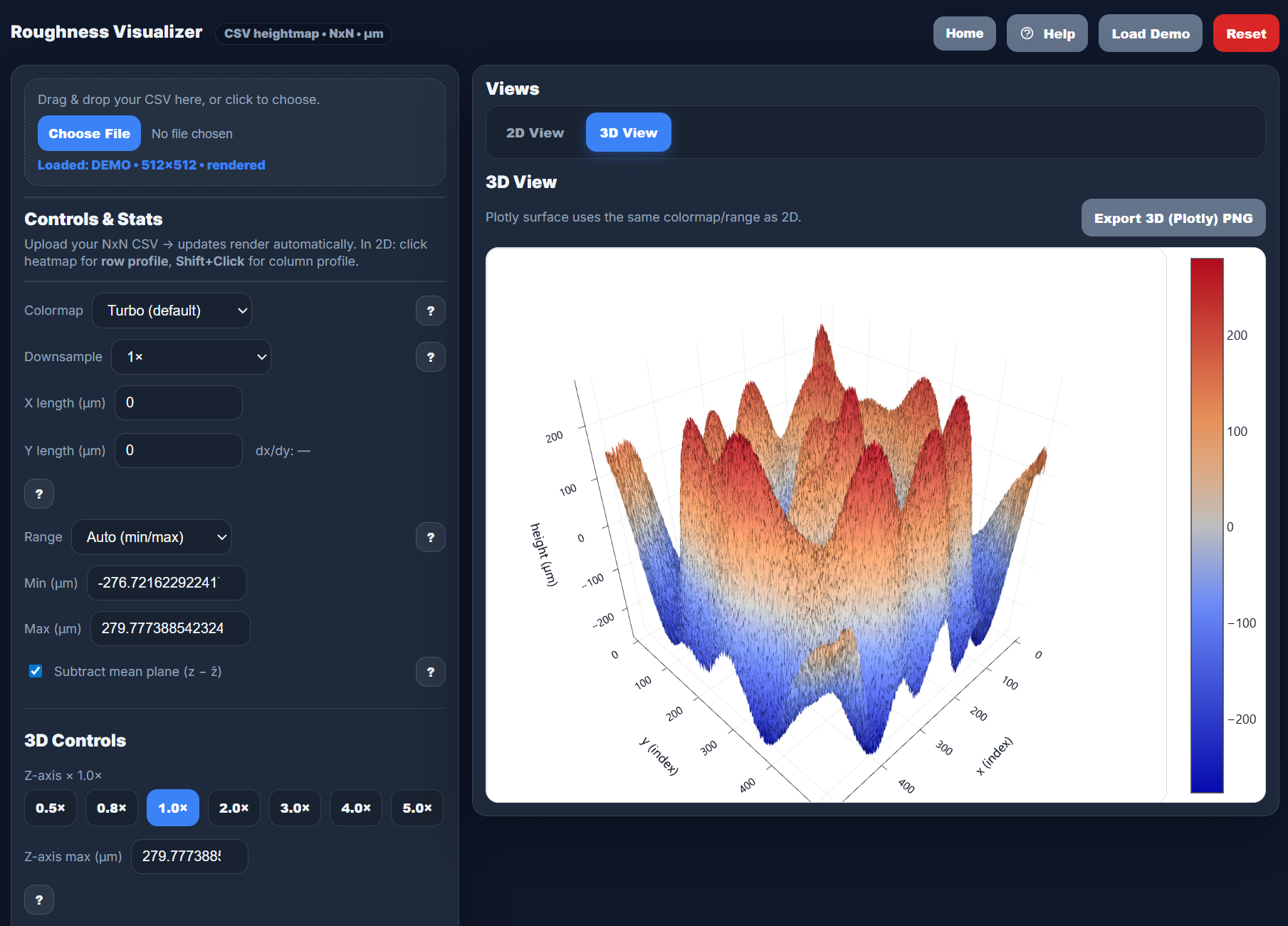
Roughness Visualizer is a browser-based tool for viewing and analyzing NxN surface heightmap CSV data. It renders a publication-ready 2D heatmap, line profiles, and histogram, plus an interactive 3D surface (Plotly), and computes common roughness statistics directly in your browser—no installation required.
Browser-basedSurface roughnessHeightmap CSV2D + 3D
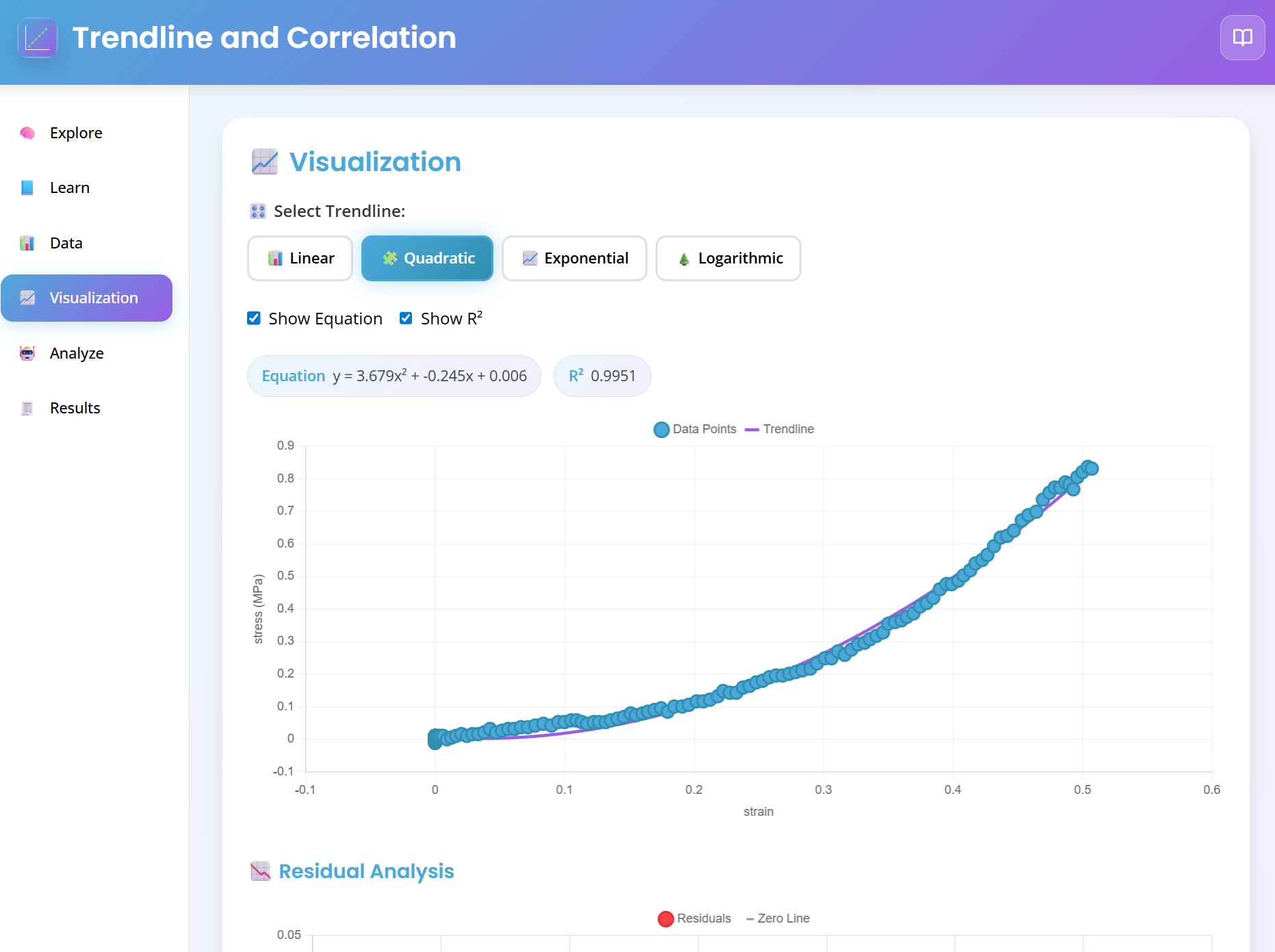
A browser-based tool for exploring relationships between variables using scatter plots, fitted trendlines, and correlation analysis. It helps researchers inspect patterns in data quickly and interpret linear relationships directly in the browser.
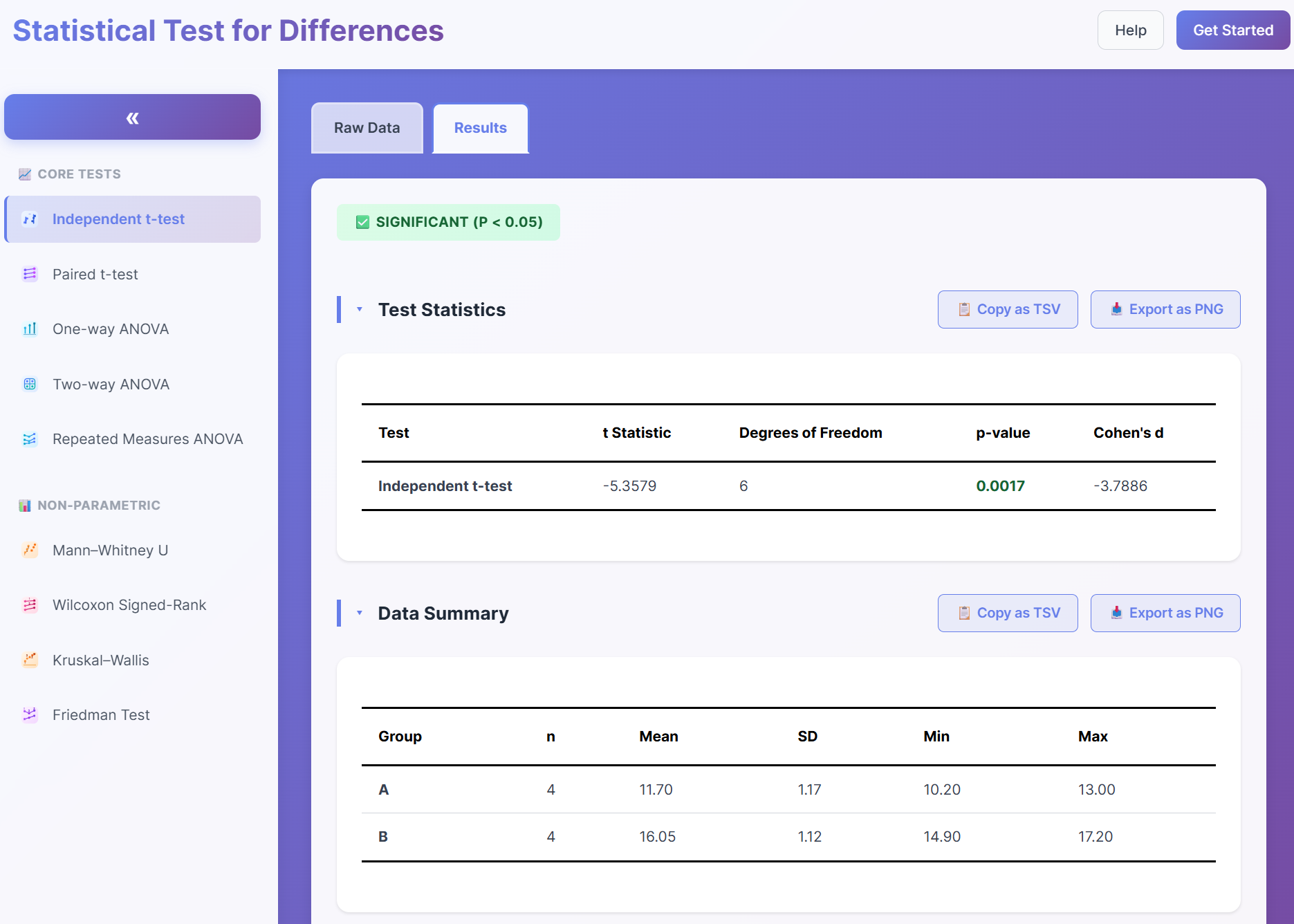
A browser-based tool for performing statistical tests for differences between groups or samples. Useful for researchers needing to quickly compare means, variances, or distributions. Includes t-tests, ANOVA, and more. No installation required.
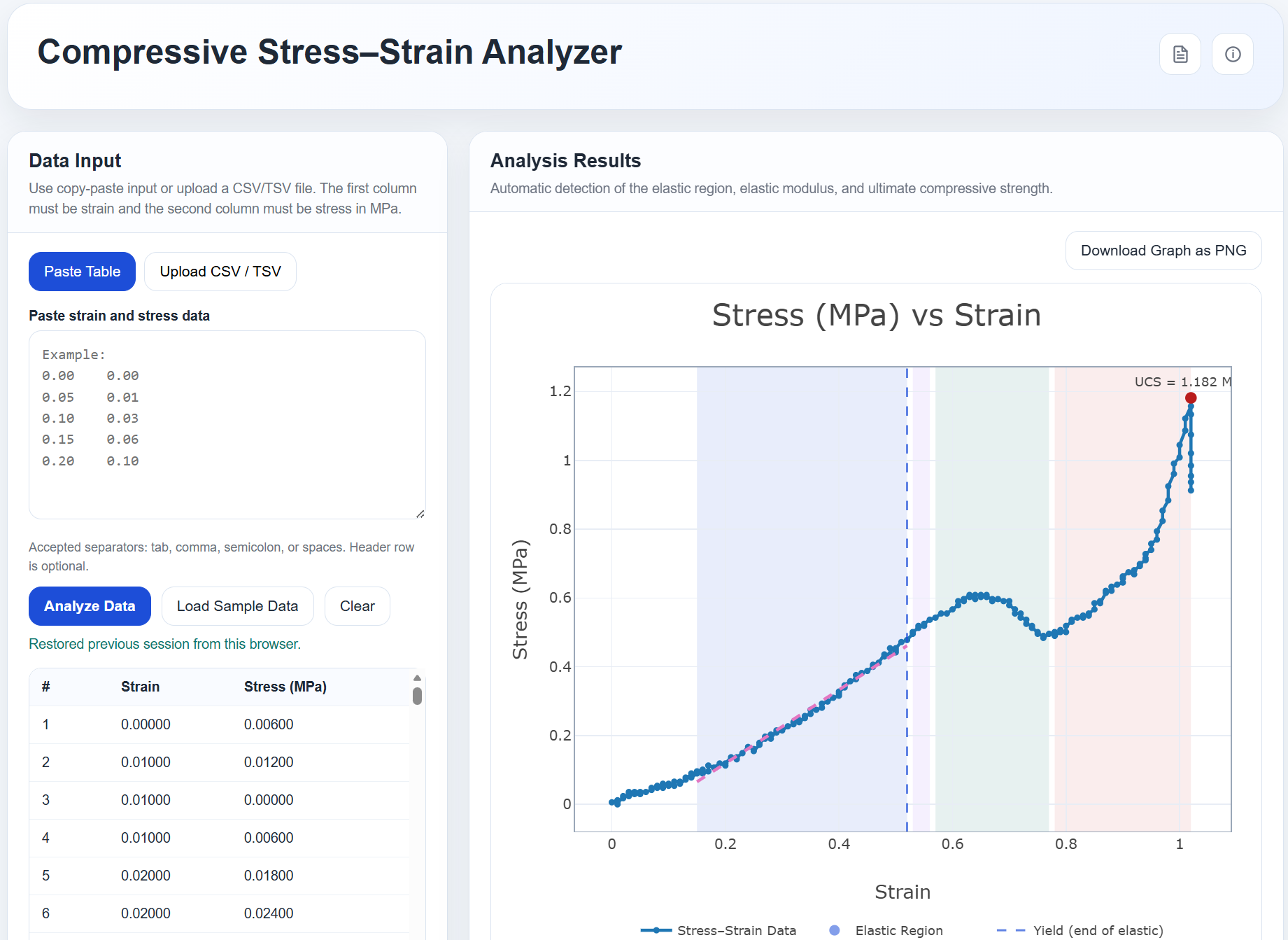
A browser-based tool for analyzing tensile and compressive stress-strain data from mechanical testing. It helps researchers inspect curves, compare sample behavior, and extract useful mechanical response information directly in the browser without installing additional software.
You're about to leave this site and open a Google Drive folder in a new tab to download sample raw data. Continue?
Cost Calculator — SEM only
Tap the number of samples to see the total cost.
Number of Samples
0
Total Cost ₱—
MicroMeasure — Quick Tutorial
Watch the short walkthrough and review key features.
Tip: Use full screen for small screens.
About
Version: 1.2.0 Website:https://www.inanolab.com/micromeasure.html Developer / Programmer: Dr. James Salveo Olarve Affiliation: i-Nano Research Facility, De La Salle University Manila
MicroMeasure is a browser-based measurement + image-analysis tool aimed at microscopy images (e.g., SEM). It runs fully client-side (no install), drawing the image on one canvas and all annotations/analysis overlays on a second canvas.
Core Workflow Features
Load image: via “Load Image” file picker or drag & drop onto the viewer. When no image is loaded, tapping/clicking the viewer triggers the file picker (mobile-friendly).
Guided status badge: walks users through Load an image → Set the scale → Make a measurement, then hides once completed.
Help / Documentation modal: “Help” opens built-in documentation with quick start, tool explanations, shortcuts, and export guidance.
Navigation (Viewing the Image)
Zoom: slider (50–300%), mouse wheel zoom, and mobile pinch behavior.
Pan: buttons (← ↑ ↓ →) + 🎯 reset pan; keyboard arrows; middle-mouse drag or Alt+drag; two-finger drag on touch.
Fit to View: automatically scales/centers the image; re-applies on resize/orientation changes.
Scale Calibration (Pixel → Real Units)
Click Set Scale, then click two points across a known scale bar.
Enter known length and select unit (nm / μm / mm), then save.
After calibration, all measurements show px + real units; min-area thresholds switch to real-unit mode.
Manual Measurement Tools
Length: click two points to create L1, L2…; show/hide, edit, delete; “Clear All Lengths”.
Angle: click three points (2nd is vertex) to create Ang1, Ang2…; show/hide, edit, delete; “Clear All Angles”.
Area: click multiple points to define polygon; close to finalize A1, A2…; edit vertices; “Clear All Areas”.
Holes: similar workflow tuned for voids; purple boxes + summary stats + ECD histogram.
Results & Export
Each measurement tab provides its own export controls.
Copy TSV and Download TSV export the current tab’s data for Excel/Sheets.
Save Image exports PNG with overlays (enabled when applicable).
Reset clears measurements/analysis/ROI and resets calibration.
Roughness Visualizer — Documentation
Overview of inputs, outputs, and basic workflow.
Tip: The in-app Help button contains full documentation.
About
Version: 1.1.0 Website:https://www.inanolab.com/roughness.html Developer / Programmer: Dr. James Salveo Olarve Affiliation: i-Nano Research Facility, De La Salle University Manila
Loads an N×N heightmap from CSV (surface data grid).
Visualizes 2D heatmap + profiles + histogram.
Renders an interactive 3D surface (Plotly).
Computes common roughness statistics (e.g., Sa, Sq, Sz).
Quick Start
Click Load CSV (or drag & drop) to import a square grid.
Use Colormap, Range, and Downsample to adjust display/performance.
Use Export PNG buttons to save figures and tables.
Trendline and Correlation — Documentation
Overview of the tool, common analyses, and basic workflow.
Tip: Use paired numeric datasets for clearer scatter plots and correlation results.
About
Version: 1.0 Website:https://www.inanolab.com/correlation.html Developer / Programmer: Dr. James Salveo Olarve Affiliation: i-Nano Research Facility, De La Salle University Manila
What It Does
Creates scatter plots to visualize relationships between two variables.
Helps inspect fitted trendlines for basic linear pattern analysis.
Supports correlation analysis to evaluate the strength and direction of association.
Provides a quick browser-based workflow for research, classwork, and data exploration.
Typical Use Cases
Explore whether two measured variables rise or fall together.
Check if experimental data suggests a linear relationship.
Support interpretation of small research datasets with simple visual and statistical summaries.
Quick Start
Open the tool and enter or load paired data values.
Generate the scatter plot and inspect the fitted trendline.
Review the correlation output together with the graph before drawing conclusions.
Statistics Test for Differences — Documentation
Overview of the tool, supported comparisons, and typical use cases.
Tip: Prepare clean grouped data before running significance tests.
About
Version: 1.0 Website:https://www.inanolab.com/statistics.html Developer / Programmer: Dr. James Salveo Olarve Affiliation: i-Nano Research Facility, De La Salle University Manila
What It Does
Helps compare groups or datasets using common tests for differences.
Supports practical workflows for hypothesis testing in research and student projects.
Provides a browser-based environment for quick statistical checking without extra software installation.
Useful for validating whether observed differences are likely meaningful or due to random variation.
Typical Use Cases
Compare mean values between two groups using a t-test.
Compare multiple groups using ANOVA.
Evaluate experimental and control results in research, laboratory work, or classroom datasets.
Quick Start
Open the tool and prepare your data by group or category.
Select the appropriate statistical test for your dataset structure.
Review the output and interpret the results together with your experimental context.
Overview of the tool, workflow, and common mechanical testing uses.
Tip: Use clean, properly labeled compression datasets for clearer interpretation.
About
Version: 1.0 Website:https://www.inanolab.com/compressiontest.html Developer / Programmer: Dr. James Salveo Olarve Affiliation: i-Nano Research Facility, De La Salle University Manila
What It Does
Analyzes compressive stress-strain data from laboratory mechanical testing.
Helps visualize the response of materials under compressive loading.
Supports quick comparison of sample behavior directly in the browser.
Provides a convenient way to inspect curves without installing separate analysis software.
Typical Use Cases
Review compressive behavior of engineered, biological, or composite materials.
Compare mechanical response across multiple samples or treatment groups.
Support thesis, laboratory, and research reporting with accessible graph-based inspection.
Quick Start
Open the analyzer and load or prepare your compression test data.
Inspect the stress-strain curve and compare trends across samples.
Use the visual output to guide interpretation of material response and performance.